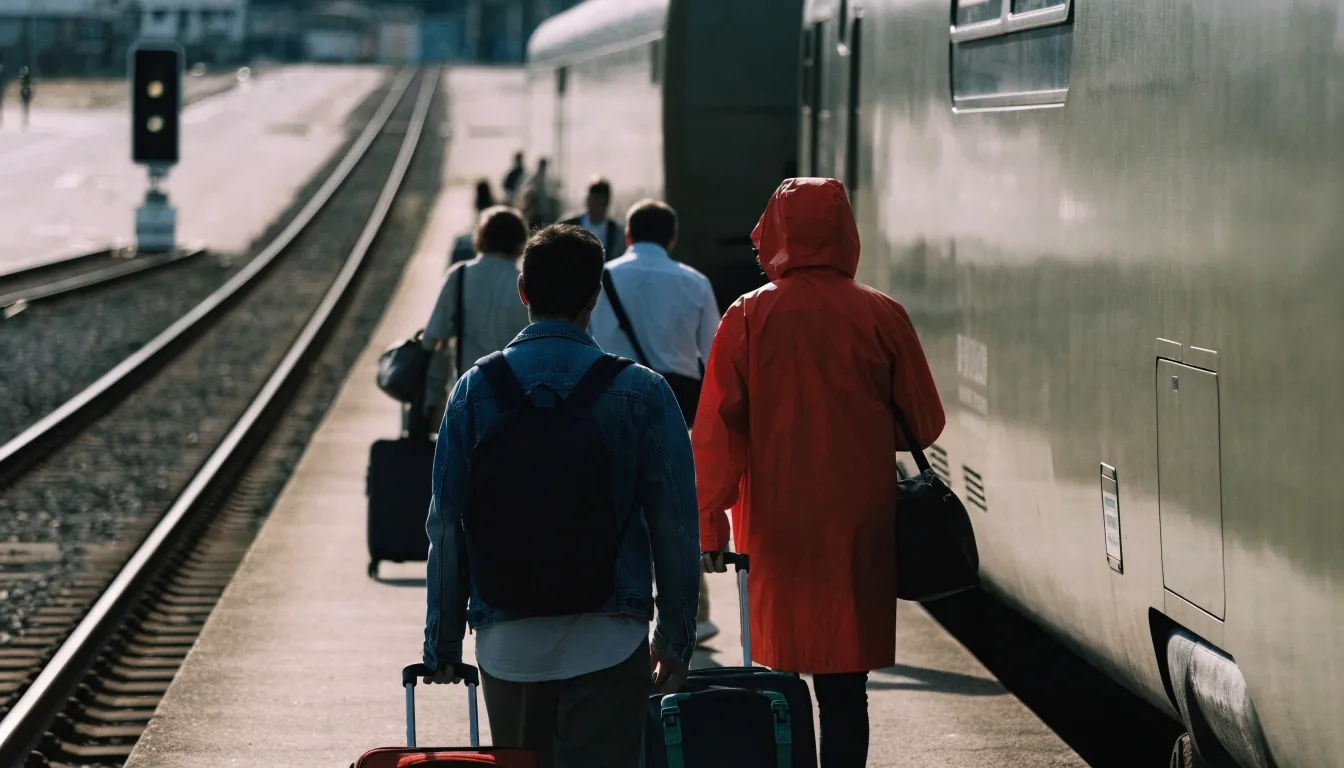
Eye-level Czech station platform with a coach apron beyond the rail side and cool daylight through the canopy

Praha / Brno / beyond

Cross-border trips, planned in order

Czechia sits in the middle of a dense regional network, and combined trips into Slovakia, Austria, Germany and Poland are normal rather than exotic. The planning method is the same as on domestic routes, with a few extra variables at the border. This page covers what changes and how to allow for it.

Czech hub side
Prague and Brno carry most cross-border departures, which is why a trip from a smaller Czech town usually starts with a domestic leg.
Hub on the other side
Vienna, Bratislava and Dresden act as the arrival hubs. Work out your hub on each side before you look at individual departures.
Slack to build in
Border checks and dwell time are built into the timetable, but a missed international service can mean waiting until the next day. Treat any single travel time as an estimate.

Why the timetable behaves differently past the border

A missed domestic bus costs you an hour. A missed cross-border bus can cost you a day.

Domestic routes on the Prague-Brno corridor run hourly, so a missed departure usually costs an hour. Cross-border services are thinner, and a missed one can mean waiting until the next day. Border crossings also add passport or ID checks and longer dwell times at the border station. The planning answer is straightforward: build in slack and treat any single travel time as an estimate.

Domestic corridor

Hourly departures

Roughly one train or coach an hour on the busiest Czech trunk routes. A missed one is a small inconvenience, and there is usually another option within the same afternoon.

Hub-to-hub international

Several a day

Trunk routes between hubs run several times a day across rail and coach. This is the layer where flexibility still exists, so plan to move on it.

Smaller border crossings

One or two a day

Quieter crossings may have only one or two direct services. If a single daily departure is your only direct option, plan around it rather than treating it as flexible.

Work out your hub on each side, then fill in the leg between

Prague and Brno are the Czech hubs on this network, and Vienna, Bratislava and Dresden act as hubs on the other side. Most cross-border routes run between hubs rather than between small towns, which means a trip from a regional Czech town often starts with a domestic leg. That order saves a lot of searching.

  • Prague

    The main departure point for cross-border rail and coach, and where most international legs begin. If your trip starts elsewhere in Bohemia, expect a domestic leg in first.

    Czech hub

  • Brno

    The southern corridor hub. Rail toward Vienna and coach toward Bratislava both pass through the Brno area, which makes it the natural join for trips heading south.

    Czech hub

  • Vienna

    The main Austrian hub for travellers arriving from Czechia. Rail from Prague and Brno reaches it directly, and onward Austrian connections fan out from there rather than from a single long service.

    Arrival hub

  • Bratislava

    The Slovak hub for the southern routes. Services into Bratislava carry both coach and rail traffic, and the corridor through Brno is the usual path for the southern run.

    Arrival hub

  • Dresden

    The practical German hub from the Czech side. Services run from Prague in that direction, and travellers continuing beyond Dresden connect to the wider German rail network.

    Arrival hub

Recognising the hub on each side does most of the planning work. Once the two hubs are settled, the cross-border leg is a short list rather than a search.

Two ways to cross, side by side

Most cross-border itineraries combine a domestic Czech leg with an international one. You might take a regional train to Brno and then an international coach from the same area, or a coach to Prague and a train onward. The lanes below set the same four corridors against each other so you can see where the rail option and the coach option sit before you compare live departures.

Train lane

Prague - Brno - Vienna

Single rail corridor, change at Brno if your onward train does not run through

1 change

Prague - Dresden

Shorter cross-border leg, onward connections into the German rail network

direct

Brno - Bratislava (rail side)

Rail runs alongside the coach option on the southern corridor

corridor

Coach lane

Prague - Brno - Bratislava

International coach on the southern corridor, different departure windows from rail

direct

Brno - Vienna by coach

Alternative to the rail route, useful when your rail connection arrives late

direct

Regional town - hub - Poland

Domestic leg to a Czech hub first, then an international coach east or north

1 change

The lanes show the shape of each corridor, not live departure times. Frequencies and transfer points move between timetable seasons, so confirm the specific departure on the operator's own timetable before you commit. Our comparison method explains how we read a connection when timetables disagree.

The four borders you will most likely cross

Each direction has its own hub, its own operators and its own quirks at the border. The order below runs roughly south to north, but the planning logic repeats: check both ends of the timetable, allow for a border stop, and do not schedule a tight onward connection immediately after crossing.

Slovakia

Toward Bratislava and the southern corridor

Services from Czech cities toward Bratislava carry both coach and rail traffic, and the corridor through Brno is the usual path for the southern route. Rail links and international coach operators both run in this direction. Timetables on the Slovak side do not always match Czech connections, so check the arrival end separately rather than assuming a seamless join. If your bus or train pulls in late, the onward Slovak connection may already have left — treat the arrival timetable as its own document.

Useful to know: Brno is the pivot for this direction. Travelers coming from Prague on the Prague-Brno corridor often find the Bratislava leg cheaper and easier as a coach than as rail, but the fares move, so compare both.

Austria

Toward Vienna by rail and by coach

Vienna is the main hub for Czech travelers heading south, and services from Prague and Brno reach it by rail and by coach. The rail route runs through Brno, which makes it convenient for travelers already on that corridor. Coach services offer alternative departure windows from the rail schedule, and border checks apply on both modes. Allow time at the border rather than at the departure station — the dwell there is built into the timetable, not added on top.

Useful to know: arrival at Vienna is straightforward if you are continuing onward in Austria or further south. The hub does the fan-out, so buy the last leg to the arrival hub first and work backward.

Germany

Toward Dresden and the German network

Dresden is the practical German hub from the Czech side, and services run from Prague in that direction. This is a shorter cross-border leg than the southern routes, but the same rules apply: check both ends of the timetable and allow for a border stop. Travelers continuing beyond Dresden connect to the wider German rail network rather than to a single long service, so treat Dresden as a station where you switch lines rather than a destination you have finished travelling to.

Useful to know: because the leg is short, a coach can be a good substitute on days when the rail timetable does not fit your start time. Check both before you lock in your plan.

Poland

Toward Poland, from more than one direction

Services from Czech cities into Poland run in more than one direction, with connections from the north and east of the country as well as from Prague. Frequencies are generally lower than on the busiest domestic corridors, so a flexible travel day helps. If your plan depends on one specific departure, confirm it on the operator's timetable before you commit — this is the direction where a single daily service is most likely to be your only direct option.

Useful to know: for Polish destinations, the hub-first method matters even more. Pick the Czech hub and the Polish hub, then decide whether the middle leg is rail, coach, or a combination.

The border itself

Border checks on these routes take time even when they are quick, and the dwell at the border station is built into the timetable rather than added on top. Some services are domestic on one side and international on the other, which affects which ticket you need. Carry valid ID, keep it accessible, and do not schedule a tight onward connection right after a border crossing.


Before the border

Confirm whether your ticket covers the whole journey or only the Czech side, and note the layover you have on the arrival side.

At the border

Have your ID within reach, expect a stop on the train or a coach pull-in, and do not plan to leave the vehicle during the check.

After the border

Give yourself a cushion before any onward connection. A short buffer costs little; a missed international connection costs the day.

Mixing a Czech leg with an international one

Many cross-border itineraries combine a domestic Czech leg with an international one. You might take a regional train to Brno and then an international coach from the same area, or a coach to Prague and a train onward. Rome2Rio-style comparison tools are useful here because they show train, bus and other modes in one view. Just remember that the operator's timetable is the final word.

When you build a mixed route, write down the two things you cannot change: the departure window of the international service and the arrival window of the domestic leg that feeds it. Everything else bends around those two points. If the domestic leg has a poor buffer, take an earlier one rather than hoping the train or coach runs early.

Read the route planner guide
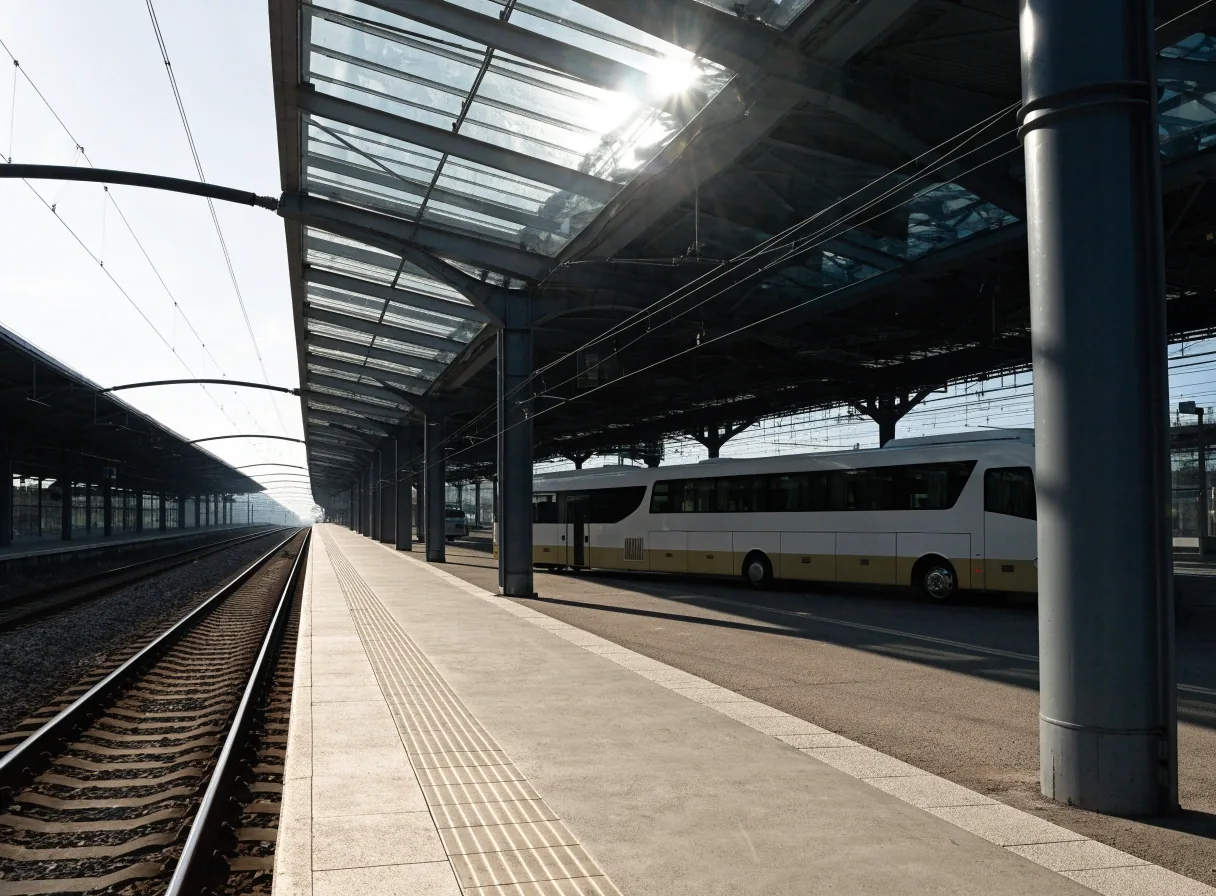
Transfer platform edge with a rail track on one side and a coach apron on the other under mid-tone daylight

A transfer platform is where most mixed routes actually change: one leg ends at the platform edge, the other begins a short walk away on the apron.

What to book, and when

Booking a cross-border trip is not one order. It is usually one ticket for the domestic leg and a separate ticket for the international leg, which means two decisions and two cancellation rules. Read both before you pay.

  1. First

    Book the international leg with its operator

    The international leg is usually the fixed point of the trip. Buy it from the operator running that service, and check whether the ticket covers the whole journey or only one part.

  2. Second

    Check the domestic leg you are feeding into it

    Domestic tickets are more flexible and often cheaper. Buy the one that gets you to the international departure with time to spare, not the one that leaves the tightest buffer.

  3. Third

    Buy early on weekend coach departures

    Advance pricing on rail can change a lot by train and by how far ahead you buy. Seats on popular weekend coach departures fill earlier than on domestic routes, so book once your dates are fixed.

We do not sell tickets. RegioLines.help gathers the route options and the guidance; the operators listed on each timetable run the service and hold the contract for your booking.

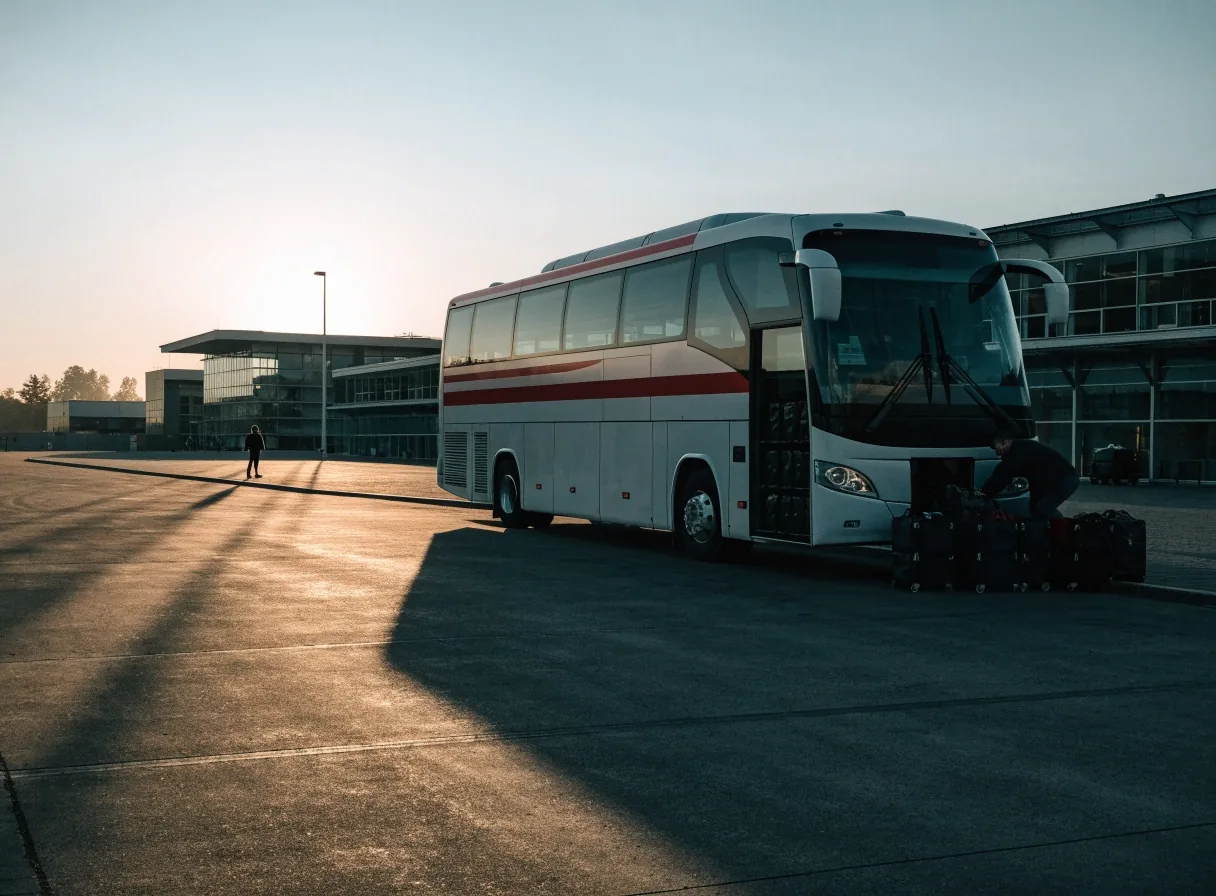
Cross-border coach on a Czech terminal apron with morning light and long shadows across the tarmac

Frequencies you can expect on each corridor

Trunk routes between hub cities run several times a day, while smaller border crossings may have one or two direct services. That difference is what makes the hub-first approach useful. If a single daily service is your only direct option, plan around it rather than treating it as flexible, and keep a fallback with a different mode in mind.

Hub to hub

Several services a day across rail and coach. This is where a same-day reroute is realistic if your plans shift.

Smaller crossings

One or two direct services a day. Plan around the departure instead of assuming you can shift to the next one.

Fallback mode

Carry a rail alternative for a coach day, or a coach alternative for a rail day. One of the two usually still runs.

These routes change more often than domestic ones

Cross-border networks change more often than domestic trunk corridors, because operator contracts and timetable seasons differ by country. The structure holds up: hubs, borders, and a mix of rail and coach. The specific departure times are what move. Recheck your route each time rather than relying on notes from a previous trip.

A simple habit saves most of the friction: keep your notes about the route, not about the times. If you write down "Prague to Brno by coach, then Brno to Vienna by rail", that note stays true for years. If you write down a specific departure time, it has a shelf life measured in weeks.

Questions travelers ask before crossing

Which countries can I reach from Czechia by bus or train?

Services run from Czech cities into Slovakia, Austria, Germany and Poland, with Prague and Brno as the main Czech hubs. Vienna, Bratislava and Dresden act as hubs on the other side, so most routes are hub-to-hub rather than town-to-town.

Do cross-border routes need ID checks?

Yes, border checks apply on these services, and the dwell time is usually built into the timetable. Carry valid ID and avoid tight onward connections right after a crossing.

Are cross-border services as frequent as domestic ones?

No. Trunk routes between hub cities run several times a day, while smaller border crossings may have only one or two direct services. A flexible travel day helps, and keeping a fallback mode in mind keeps the plan honest.

Plan the route, then check the day you travel

The hubs, the border dwell and the ticket split stay the same from one trip to the next. Departure times, seat availability and operator contracts do not. Use this page to shape the route, then confirm the specific departure on the timetable that runs it — ours or the operator's — on the day you buy.

Need a route checked by a person

Write to us with the towns, the dates and the mode you prefer. We answer route questions Monday to Friday and pass anything we cannot confirm back to the operator's own timetable.

Send us a border route correction

RegioLines.help · Na Florenci 2116, 110 00 Nové Město, Czechia · Mon–Fri: 09:00–18:00